Harmattan AI’s Drone Boom and Europe’s Defense Shift
– 4 min read
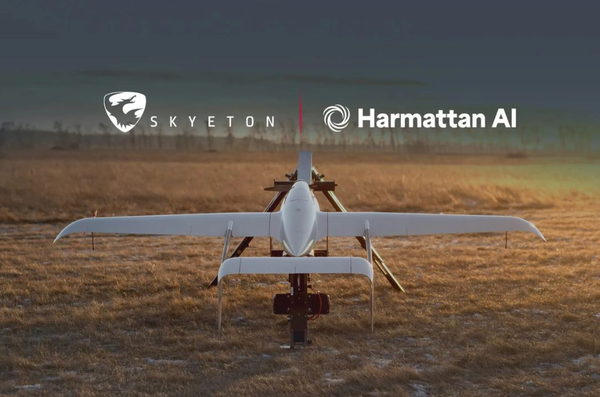
A young French company has pushed drone output to 1,300 units a month, with plans for a factory capable of producing 100,000 aircraft a year. This signals a fundamental shift in industrial ambition, strategic independence, and AI's role in real-world operations.
Invest in top private AI companies before IPO, via a Swiss platform:
 SmartProfit Finder AG
European demand for drones has surged across border monitoring, reconnaissance, logistics, and emergency response, but local supply hasn't kept pace. That gap creates vulnerability. Local manufacturing gives Europe control over how these systems are built, deployed, and regulated, reducing dependence on foreign suppliers in an era of geopolitical friction.
Current output is already proving its worth: hundreds of drones support French border monitoring while a larger portion assists UK fisheries enforcement in the North Sea. The planned Orly-region factory, targeting 10,000 units monthly, would transition the company from promising startup to serious industrial platform, driving down unit costs and strengthening its appeal to long-term government buyers.
This company's signature drone is compact yet carries AI capabilities that transform it into a robotic decision system. Rather than depending on constant human input, it processes environmental data in real time, identifying obstacles, adapting routes, and coordinating with other drones autonomously.
Key capabilities include real-time path planning, target recognition from visual and sensor data, and swarm collaboration, where coordinated groups cover more territory and maintain resilience if one unit fails. In border monitoring, this might detect suspicious movement; in fisheries enforcement, it supports vessel tracking; in logistics, it identifies delivery zones.
For investors, software multiplies hardware value. A drone becomes a platform where better algorithms improve performance without redesigning the aircraft, enabling recurring revenue, stronger customer relationships, and a more defensible business model than manufacturing alone.
The most dynamic factories now resemble software systems in physical form. With very high automation rates, the facility behaves less like a manual workshop and more like an intelligent network, delivering consistency, real-time quality monitoring, and continuous optimization.
Generative AI is expected to optimize the supply chain by modeling scenarios, forecasting component needs, and reducing bottlenecks. In plain terms: the right parts reach the right place at the right time with less friction. This could meaningfully lower costs, protecting margins and enabling more competitive pricing as the company scales.
Location near an established aviation cluster provides access to suppliers, engineering talent, and logistics links. Manufacturing excellence itself becomes a competitive moat; the ability to deliver reliably at volume transforms the company from experimental startup into trusted long-term supplier.
Drones have become strategic assets because geopolitics left no alternative. European governments, sharpened by regional conflicts and supply-chain failures, are urgently building domestic production capacity. Contracts already reflect this: real institutions are paying for, deploying, and depending on these systems.
Public and strategic funding signals that policymakers see durable value beyond short-term commercial gain, easing capital constraints and strengthening credibility. The dual-use nature, spanning border patrol, maritime monitoring, logistics, and infrastructure inspection, broadens revenue streams and builds resilience if any single segment slows.
The investment case rests on converging forces: geopolitical need expanding the market, contracts confirming product-market fit, and capacity expansion demonstrating execution. Companies sitting where need, policy, and innovation intersect often create the most significant opportunities during industrial realignment.
Every powerful technology carries a second story. When drones make autonomous decisions, accountability becomes complex. The black box problem, where AI reasoning is difficult to interpret, is especially serious in high-stakes settings like border monitoring. Without clarity, trust becomes fragile.
The company's emphasis on European AI compliance and third-party audits is meaningful. Independent review can verify that systems behave within defined limits, and in a trust-sensitive field, outside scrutiny may become a competitive advantage. The non-weaponized designation also matters, distinguishing observation tools from force systems in regulators' and the public's eyes.
For investors, these issues are financially relevant. Regulation shapes valuation, public trust influences contracts, and governance standards affect capital access. The enduring leaders in disruptive technology combine innovation with legitimacy, building auditable, compliant systems that earn trust. In markets shaped by security and automation, that balance is not optional. It is the standard serious players must meet.